


The fashion flow: workings of a supply chain in the clothing industry
- Olebogeng Itumeleng

- May 17, 2024
- 7 min read
The fashion business is an intricate connection of various industries. The connection is expansive, stretching out from something as simple as farming and progressing to the window displays of the world’s leading clothing brands. Although some companies may do it all, the majority of fashion and clothing businesses focus on one or two aspects of these connected industries. This article breaks down these industries and further looks into how they relate, perform and affect each other.
Suppliers of Raw Materials: Farming and Agriculture

The majority of consumers cannot fathom the role that something as overlooked as farming has to play in modern fashion. The World Counts estimates global cotton production to be around 27 Million tons every year. This would be equivalent to every individual on earth getting a new t-shirt everyday for a whole month.
Cotton cloth has been the preferred material for clothes since 5000 BC, and many nations like America have built their economies by cultivating cotton for the world's largest textile establishments in Europe. Cotton is mainly produced and then weaved together in textile mills in order to create fabric that will ultimately be useful for creating products for fashion or any other industries like couches and interior furniture for example. In addition, other frequent natural fibers in clothing production include silk, hemp and those derived from animals like wool, fur and leather fibers among others.
Although natural fibers may be the most important primary input for clothing production, the invention of synthetic textiles means clothing doesn't have to depend on natural materials only, but can also use synthetic fibers like polyester and spandex.
The Textile Industry


Material inputs introduced in the first part of the value chain are then passed on to the textile industry which then twists strands of materials like raw cotton or silk into yarns and then turns yarns into various forms of fabrics through the weaving process. Before the 1800’s people would have to manually spin threads of cotton by hand and this was a lengthy and exhaustive process for creating fabrics, meaning only a handful of products can be created at a time. Since the invention of water and steam powered textile machines during the industrial revolution, the volumes of fabric produced have increased immensely, allowing for greater production and the mass consumption of clothing products.
Manufacturing

At this stage clothing products are made ready for commercial use. A typical clothing manufacturer would acquire all the inputs and components needed to produce finished garments, and these would include the fabric, threads, zips, buttons, embroidery and printing, labels, tags and any other thing that physically goes into the finished product. When Henry Ford introduced assembly line production in his factory, it proved that manufacturers can systematically make products in a linear progression allowing for mass produced items at a timely and efficient and cost effective manner.
Manufacturers across many industries including clothing have since adopted this idea, adding to their own, a systematic process that entails using a pattern design to cut the fabric into panels that are eventually sewn together to make a single clothing item. Some manufacturers have complicated processes that may occur in the beginning, middle or ending of the operation, this includes pre-washing, dying and aging fabrics, etching and distressing. At its simplest form, manufacturing a product would involve cutting the fabric, sewing the panels together, sewing on components like buttons and zips and lastly attaching the clothing labels and tags, but this is specific for different manufacturers as competition compels them to produce in their own distinct ways. The machinery used allows for efficient production of mass produced clothing items. This includes pattern cutting machines, lockstitch and overlock sewing machines, embroidery and printing machines and machines used for washing and drying processes. The last part of the process in the manufacturing of clothes is to make sure the garments adhere to some kind of quality standard. Making sure the stitching, sizing is correct and more importantly that there are no defects in the product. This last step is globally known as ‘quality control’ and is credited to the Japanese philosophy of ‘kaizen’ which emphasizes a focus on design and development to create efficient and reliable products.
Distribution

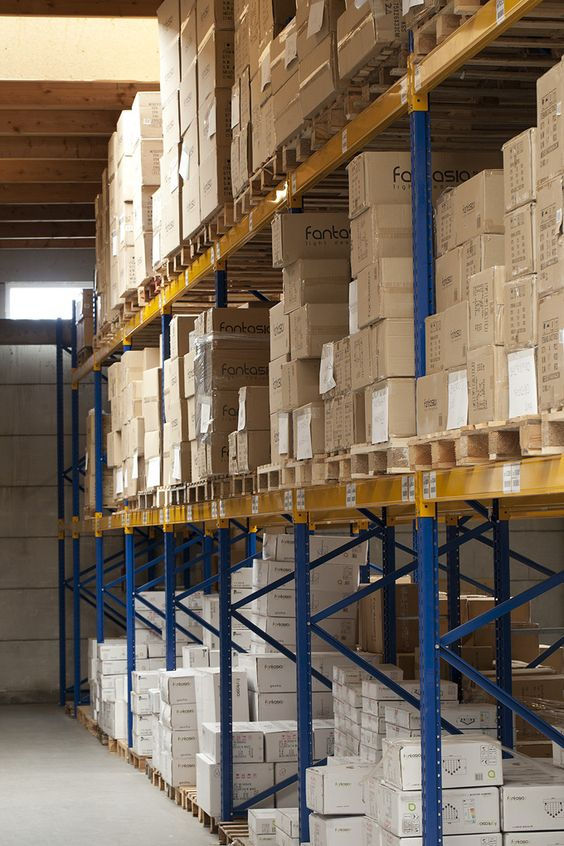
This segment of the value chain assumes that clothing production is already complete and that the product is ready for consumers to use. This particularly focuses on moving the product from the manufacturer and storing it in a facility that is quite close to the actual customers. This may be handled directly by individual businesses, although, wholesale businesses with vast storage facilities may buy large quantities directly from the manufacturer and then sell it for profit to small scale retailers. This logistical effort usually involves the transportation of the clothing items from one place to another and then having storage facilities close enough for the retailer to always keep products in the store. It addresses the issues concerned with the availability of the product and ensuring that the products reach the widest possible audience, ultimately affecting how fast or slow a product is consumed.
The Retail Industry

The retail industry only has one primary focus and that is to sell stock of all clothing items in their inventory. Mass produced products may be sold for a lesser price and that would mean retailers would have to sell in high volumes in order to make substantial returns. Retailers can either buy stock from manufacturers or wholesalers at a lower price and then add their own profit margin or they take on stock as consignment from independent brands and then split a percentage of the revenue. Some retailers may be involved in the actual production of their own products or some manufacturers may be involved in directly selling their products to the end user, this is solely based on where individual businesses see opportunities or gaps in their respective value chain.
In recent times, clothing brands will most likely optimize their business models for both physical and online transactions in order to reduce the idea of a ‘middleman’ profiting off their sales. Retail is a game based on traffic, taking into account the amounts of potential customers that come into contact with your brand’s product. One way to win the game is by choosing the right physical location and making your products easy to reach and purchase. Malls are considered a prime location because of their evident number of people willing to buy stuff at such locations, although the rent may be expensive, if the brand, the product and the service provides much value, customers will most likely comply. Another way to achieve this is by creating an online store, this can be done through globally renowned and accessible platforms like Shopify that make it easy to reach any customer with a computer or a smartphone, allowing them to make purchases without having to be at any of the company’s physical locations whereas the products will be delivered or collected at the convenience of the customer. This helps reduce/eliminate aspects such as paying rent, the traveling costs of customers and the burden of maintaining a physical store which comes with managing staff, the interior and risks including break-ins, theft and fire to name a few. Although this seems to provide convenience on both ends, online customers may be skeptical of actual products versus product images on the website and fraudulent activities related to online transactions.
Brand Marketing

Now that products are readily available for consumers to purchase, it is the brand’s responsibility to make sure that customers are aware of its products, how these products can provide a benefit to the consumer or solution to a problem and where to find them. Marketing not only involves the visual aspects of the business like the logo, website and advertising. It is a holistic approach to make sure customers can tell the difference between one brand of products from other products available in the same market. Ultimately this purpose only serves the sales process, making it a fairly easy choice for customers to purchase a brand’s products because they have trust in the brand and trust its products too. Marketing is also useful for research and communication, learning from its current consumers through back and forth engagement on social media platforms; this gives insight into how the brand/products can be improved/innovated or gauging how customers are loyal to your brand and how much they are satisfied with the brand’s product and service.
Customers, Influencers and Social Media

This is the part of the value chain that is most recognizable because products are actually consumed, put into use and endorsed either by the customers themselves or influential people on social media platforms. This involves engagement with a brand's products and ultimately where consumers and potential customers realize how much more valuable a product is compared to its counterparts. At this point, products are either revered by its consumers or shunned because of their inability to perform to a certain degree. It is a very simple understanding of the performative value of a product, if it is better in-use, or cheaper but still effective or stands out from similar products then consumers cannot help but refer these products to their peers either through word-of-mouth or on a supposedly larger scale- social media.
Start from any point in the value chain

There are many points of entry into the fashion industry, meaning businesses can start by serving any one of the related industries mentioned above. The decision should be based on the business’s ability to compete by providing greater value to the market than its competitors. It would be easier to start a business that is directly selling to consumers because this creates activity, traction and demand for a brands’ product even if the quality is not best; quality can always be improved but it is worth mentioning that even with higher quality products some brands can not reach customers as much as they would like to. The ability to acquire or have access to financial and other resources is quite handy especially when establishing a business in the farming, manufacturing, and distribution parts of the value chain. The majority of people do not have access to these resources and only a select few will actually gain the skills to solicit these resources from other businesses and varied institutions.


Comments